


My role isn’t to tell you what to do, but to work closely with you to help you develop a stronger sense of who you are, how you feel and what you need or want.
The people I work best with have usually experienced one or more of the following:



“When I was unable to describe thoughts and feelings with words easily, I described pictures or scenes I saw. Helen understood these and helped me understand what it was I was feeling.” Rhodri, 29
“We landed on the phrase “out of the mind and into the body”, which for me was a defining moment in this journey. ... The overwhelming emotions I was experiencing when I first came to our sessions have completely gone, and I am now able to navigate situations which may bring up these emotions. I have regained the lust of life that I felt had gone.” Nathan, 26

Trauma
I work with people who have had many difficult experiences, particularly in childhood. Some experienced or witnessed violence or sexual abuse. For others it was a case of living in a chaotic environment where you had to grow up quickly, learn to look after yourself and not expect too much from others.
In these situations you learned to close down your own feelings, lock them safely away. You didn’t have the luxury of letting those feelings in because who would be there for you, to hold or comfort you? And so you pulled your tendrils in and toughened up. Decided at an early age never to risk rejection or abandonment, always kept yourself a little apart, on the outside looking in, because, well, it just seemed safer that way.
Or was it the case that nothing awful happened, but the people looking after you were mostly busy or distracted? Neglect seems too strong a word because you were fed and clothed, but no one seemed terribly interested in you. They didn’t ask about your hopes and dreams, what you liked or disliked, didn’t say they were proud of you, or show that they cared in a hundred small ways. You think your parents loved you, but notice a hesitation as you say it. Perhaps you find it hard to remember many specifics about your childhood. And it wasn’t all bad, so maybe you’re over-thinking it. You rationalise that others have had it far worse, so you’re not really entitled to complain.
You might have concluded that the problem was you, that you must be faulty in some way. Not as good or as loveable as other people. Then you had to push that feeling of shame down too, far, far down so you could pretend that everything was fine, figuring that if you just pretended hard enough you’d forget those feelings gnawing away inside. If you just worked hard enough to control everything and please everyone then things would be fine. But that time never came, and here you are still disconnected from others, and from yourself, unsure what you even like or want, rejecting yourself over and over because that feels preferable to the risk if upsetting someone else.
It’s likely that no one ever taught you that you could survive big painful feelings and still be okay afterwards. It’s never too late to learn this. We can practice this together. We’ll look at how pushing down the negative emotions means you don’t get to experience the positive ones either. If, cautiously and carefully, you gain the confidence to welcome all your feelings, you create the potential for more joyful connection to yourself and other people.

Grief
Grief turns lives upside down. It’s exhausting. Relentless. A person died, a relationship ended, you lost your job, made a decision you regret, had the realisation that you’re never going to land that job you dreamt about, or become a parent, or fully regain your health. How can the rest of the world carry on as normal? Everything. Has. Changed.
Loss needs to be mourned, and it has an impact on our bodies and our brains. You may get a sick, shaky sensation. Feel unanchored or alone. Find it hard to focus or make decisions. Supposedly small tasks become overwhelming.
You might manage to go through the motions each day, but find there’s a foggy, watery quality. People’s voices sound muffled. You sort of hear them but aren’t properly present. Your brain doesn’t seem work like it used to. And then there’s the fear. What if I’m adrift forever and never make it back to shore? Or possibly part of you doesn’t want to feel normal again, because that means you’re forgetting your person, ‘moving on.’
Maybe internally, silently, there’s guilt about not feeling as sad as you think you should or as everyone else assumes you do. A blanket of numbness may prevent you from feeling much of anything at all. Or even – whisper it – part of you is glad, feels a secret relief that a person has died. Does it mean you’re a terrible person for even thinking that thought?
It’s a time of confusing and contradictory feelings. Our job is to give all those feelings some space. We acknowledge the shame and the ‘shoulds’ and gently pay attention to what they are telling us. We notice if you feel pressure to hurry yourself through grief from societal messages that ‘surely you must feel fine by now’ because it’s been however-many-months. Mostly we focus on what you actually feel. We can give space to all these emotions, learn that none of them are wrong and that you’re not alone in feeling the way you do.

Big Life Changes
You may be choosing to make significant changes in your life after listening to an inner voice telling you it’s time. Perhaps you know that shift is coming but are hesitant to take the leap. Or you’re faced with momentous changes that aren’t your choice at all, leaving you overwhelmed and disoriented.
Have you noticed signs that something doesn’t feel right? Perhaps you’re irritable, disengaged or conscious of unhealthy patterns, such as relationships with drugs, alcohol or food, as you grasp for something to distract you and quieten the worries chattering in your head.
So here you are, unhappy in your work or relationships, keen to embark on something new. You might be struggling with telling people something they may not want to hear as, for example, you quit your job, leave your partner, distance yourself from family or friends, or question whether you’re as straight or as vanilla as you once thought. Or, caught in a slow-motion gasp, you’re left reeling from the shock of unexpected news – perhaps you’re the one who’s been left or let go, or you received a frightening diagnosis.
If you’re trying to puzzle things out but are going round in circles, it might be time to seek support. We’ll slow things down, work to calm your nervous system and listen to what your inner voice(s) have to say. We’ll explore if you’re going where you thought you were heading, and if you’re even the person you thought you were. We’ll take stock of where you are, and where you want to be, and identify the steps that feel manageable for you to take.

Session Formats
I offer appointments in a range of lengths and formats. No one format is better than another. It is a personal choice about which would be best for you.

Appointments in a counselling room
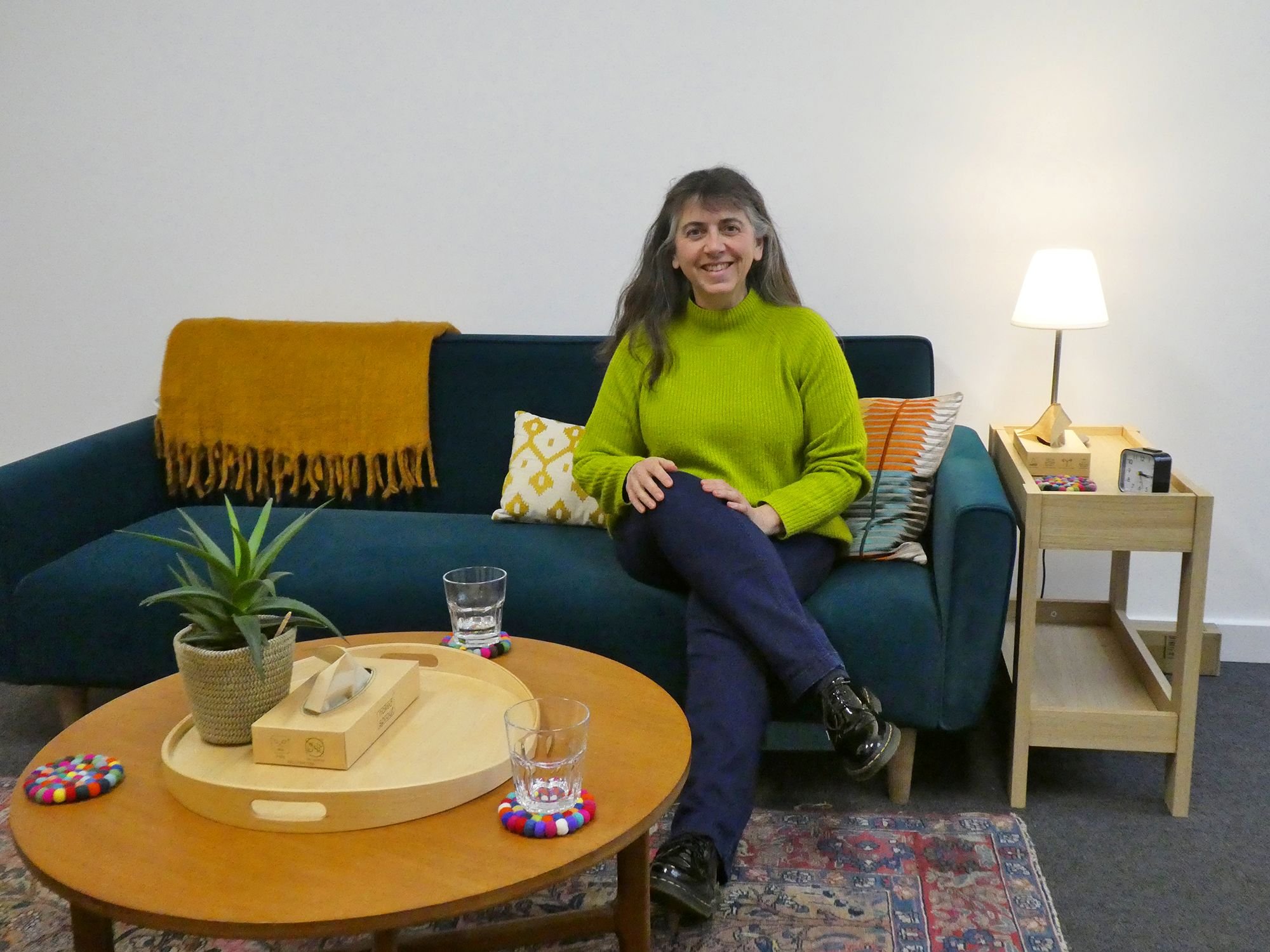
We meet in person in a comfortable, private counselling room where we can sit and talk.

Telephone appointments
At our appointment time, I will call you and we’ll speak by phone. We might not ever meet, but for some people the increased sense of anonymity makes it easier to speak openly. Some clients do the call while taking a walk, which is fine so long as you have reliable mobile coverage, won’t be interrupted and your location isn’t too noisy.

Online appointments
We have our session remotely using Zoom. You get to be somewhere convenient, whether that’s at home, at work or even in a parked car. So long as you have a good signal and some privacy, we can make all sorts of locations work.
Walk & Talk Therapy appointments
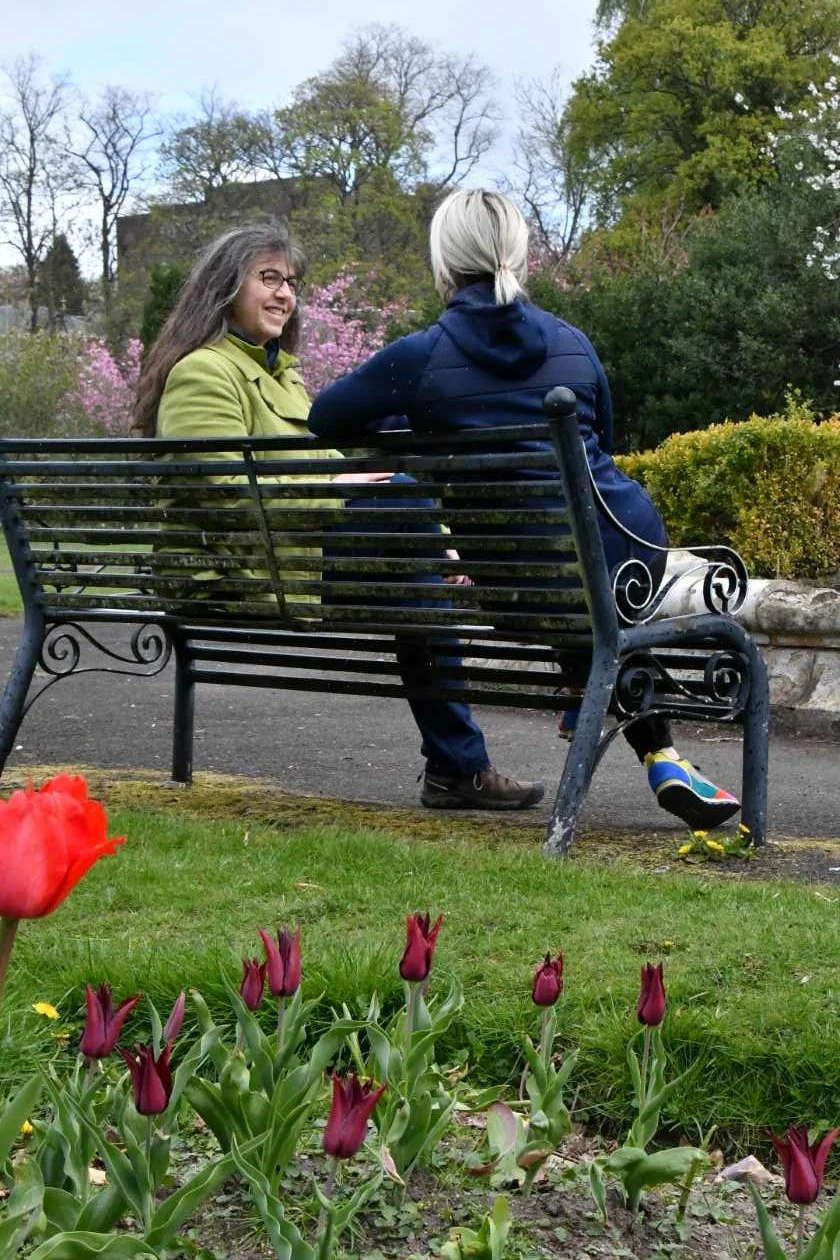
For ‘Walk & Talk’ sessions, or ‘Wheel & Talk’ for wheelchair users, we meet in a park and have our sessions outside on the move. Many people find it therapeutic being out in the fresh air and moving their bodies. We’ll adjust the route according to your energy levels and physical capabilities. The pace is up to you. We can stroll gently, keep up a brisk pace, or pause and sit on a bench. We’ll discuss in advance accessibility, confidentiality and what to do if there’s bad weather.
Therapy Intensives
If you want to progress more quickly, or if your work pattern or caring responsibilities prevent you attending regular appointments, we could work together intensively over half a day or longer.
A Therapy Intensive package consists of:
A pre-intensive intake session
A half-day (or longer) intensive
A follow-up appointment
Although this format won’t suit everyone, it can be highly efficient. Being able to do more than a month’s worth of work in one go allows us to make more rapid progress.
These can be one-off packages, or something you choose to do every few months. Options for longer sessions tailored to your needs are available by arrangement.
My Fees
I usually see clients for weekly or fortnightly appointments (or for one-off/occasional intensive sessions).
Typically, counselling sessions tend to be 50 minutes long, but I also offer longer appointments. My 90-minute appointments are equivalent to a double session and allow us to cover more material, work at greater depth and feel less rushed. They may suit you if you’re someone who takes time to open up or if you like to get immersed in a topic quite deeply. However, they probably wouldn’t be a good fit it you struggle with limited energy or the topics you want to work on feel overwhelming and you need to pace yourself carefully.
50-minute sessions are £75
90-minute extended sessions are £140
Therapy Intensive packages start at £450
I ask for payment by bank transfer in advance of your appointment.
I offer some reduced rate spaces for students, counselling trainees or those on low incomes. Just let me know if you’d like to discuss this and we can chat by email or in an initial consultation call.
FAQs
More about how this works and what to expect:
-
If you are considering working with me, the first step is to book a free 20-minute initial consultation. It’s an informal conversation with no obligation. We’re just getting to know each other a little to see if we’d be a good fit. You can choose whether we speak by Zoom or phone.
-
We check whether there is an appointment slot available at a time that suits you. I’ll book you in, send you my paperwork and directions or a Zoom link. You don’t have to commit to a certain number of sessions - you get to choose how long you work with me.
-
50-minute appointments are £75 and 90-minute appointments are £140. I sometimes have reduced-rate spaces available. Check out the ‘fees’ section above for more information.
-
I generally see clients every week or every fortnight (or for one-off or occasional intensives). When we agree a regular appointment time, I reserve that timeslot for you, though we can make occasional changes to work round holidays etc. If you are interested in a different appointment pattern, let’s talk through what you are looking for and I’ll let you know if that arrangement would be possible.
-
Yes. I use a couple of different counselling locations in order to cater for various access needs and mobility limitations. This gives options to use a ground floor room or to access to upper floors either by lift or stairlift. Walk & Talk or Wheel & Talk locations can also be arranged to suit your mobility level.
-
It depends! I do work with clients internationally, though it largely depends on where you are. My professional insurance covers me to work online with clients in most parts of the world, though NOT clients based in the USA or Canada. Elsewhere, it depends on whether counselling/psychotherapy is a regulated profession where you are based. We can certainly explore whether this would be possible.
-
I have a 24 hour cancellation policy. If you cancel in advance of that there’s no charge, and we can sometimes reschedule for an alternative time if I have space. However, if you miss a session or you cancel with less than 24 hours notice, the full session fee is payable. We’ll talk about the cancellation policy in detail when we begin so you understand fully how it works.
-
No, I don’t offer counselling support by text or email. We would just communicate by text or email for practical reasons, such as confirming appointment times. You can find counsellors who offer text or email-based counselling at www.acto.org.uk
-
No. I don’t offer couples counselling or family counselling. I work 1:1 with individuals aged 18 and over. This is a confidential space and my contract is with you as my client, rather than with anyone else.
-
While I’m glad to help you explore areas of your life that feel very difficult or upsetting, I do not offer a crisis service. All my appointments are booked in advance.
If you require urgent attention:
Contact a crisis helpline e.g. Samaritans (24 hours) 116 123
Call your GP or contact NHS 24 on 111
In an emergency, dial 999 or go to a hospital Emergency Department and request a mental health evaluation.
-
Personally, I use both terms fairly interchangeably. Some definitions suggest that counselling is shorter term, or focuses more on current issues, while psychotherapy goes into greater depth and and has more focus on past events. In practice, I find it hard to draw a neat line between the two as your present and your past are always intertwined. I work with whatever you want to bring. If you want to talk about the past, even in a shorter series of sessions, that’s what we’ll do.