
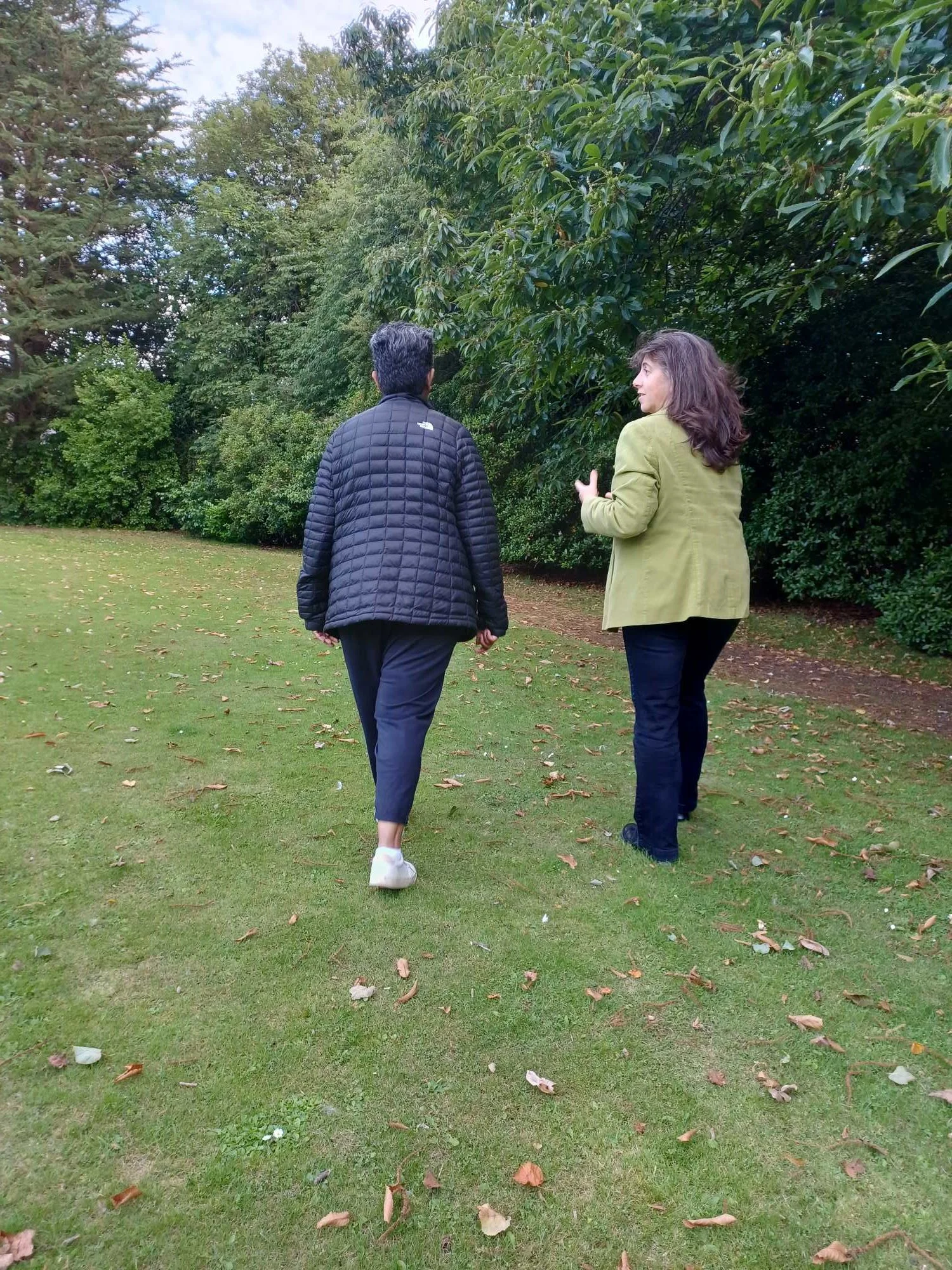
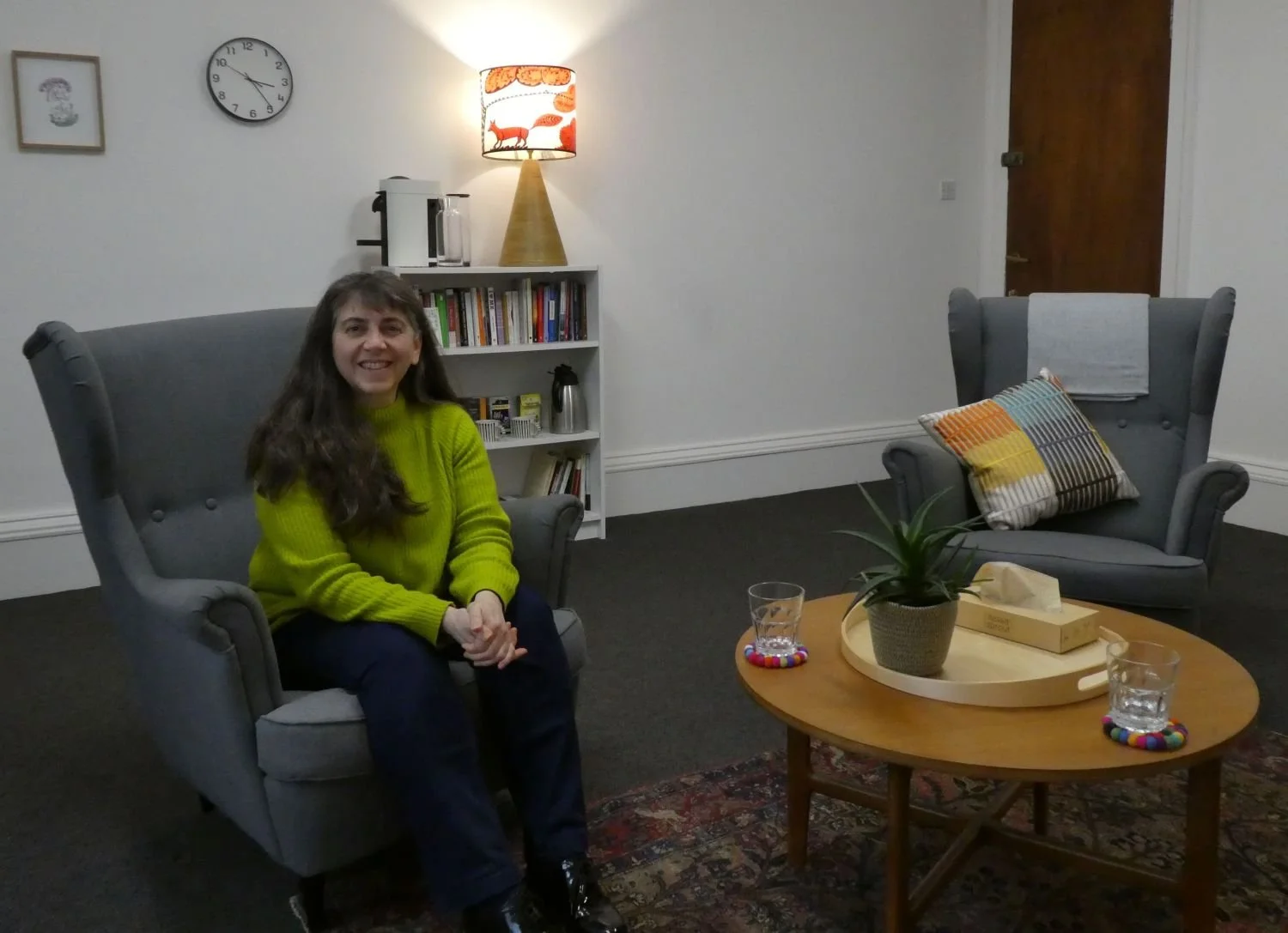
I’m Helen (she/her) and I can help you find the courage to turn towards the things you find distressing or confusing.
My role is to stand alongside you
so you don’t need to
face these alone.
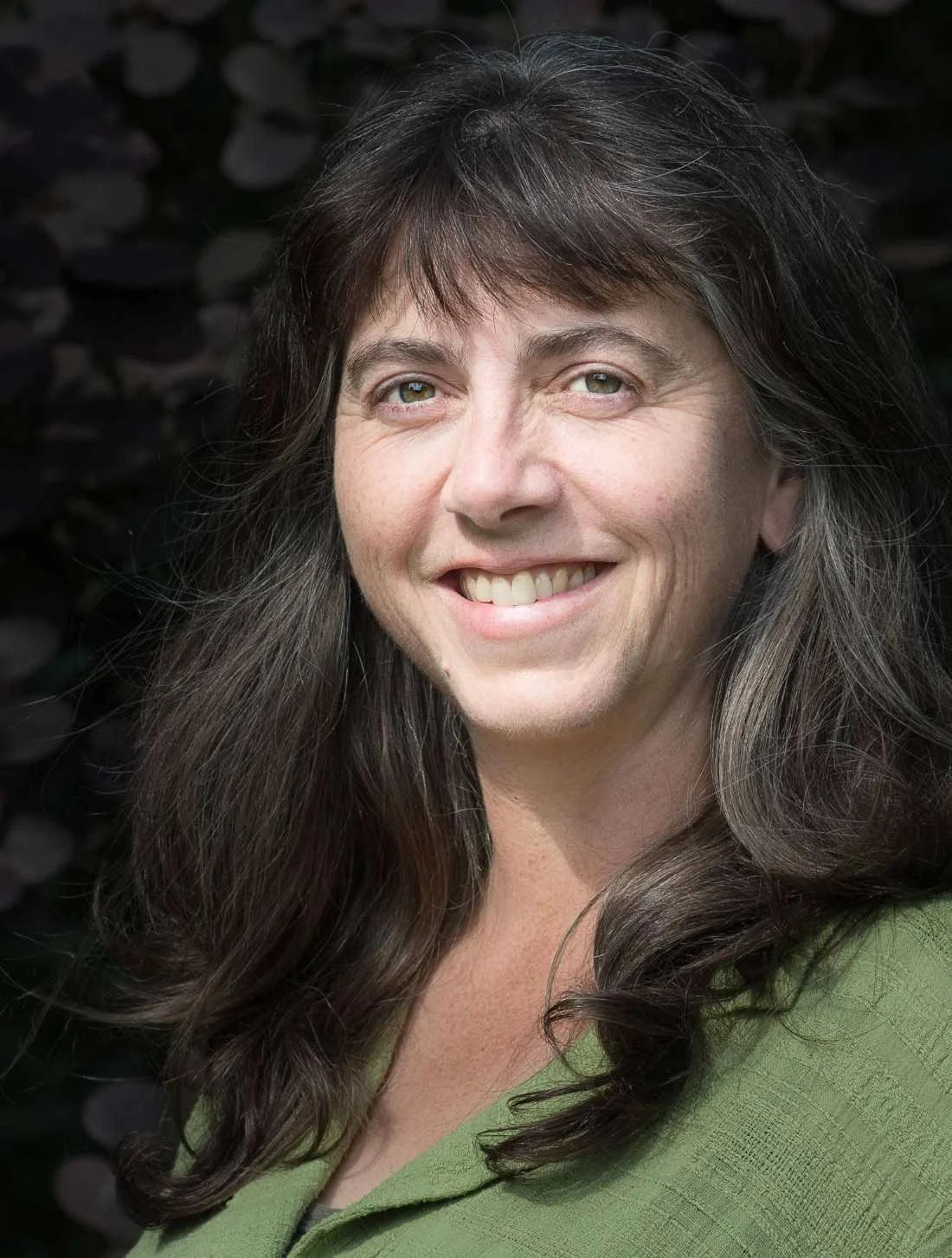

More about me
Before becoming a counsellor and psychotherapist, I had a varied career in community development, university teaching and social research, all roles that gave me years of training in putting people at ease, making connections and learning to listen well.
I’ve also faced challenges of my own: cancer treatment in my 20s; experiencing doubt and loss of direction; moving overseas; feeling isolated; coming out; providing end-of-life care; changing career; starting again, and again. Along the way I learned a lot about myself, including that I’m remarkably comfortable talking about awkward, dark or difficult topics like trauma, abuse, sex and death.
What to expect working with me
I’d position myself at the more active, hands-on end of the person-centred therapist spectrum. This means that I’ll ask questions and roll up my sleeves to try and puzzle things out with you, and I’m very glad to pull on my metaphorical wellies and join you in the mud, if that’s where you feel stuck.
We work together, sharing our expertise. You’re the expert in your life and what it feels like from the inside, while I bring the theory and research, plus maps from travelling to plenty of difficult places with other clients previously. I help you find the courage to turn towards the things that you find distressing or confusing. My role is to stand alongside you so that you don’t have to face these alone.
I’m not able to guarantee a particular outcome in therapy, because, ultimately, it’s you who does the work on yourself. But I can commit to:
doing my utmost to see things from your perspective
being open, empathetic and accepting
giving you my undivided attention during our sessions
calmly holding whatever you want to share, even if you worry it that will be too much, or worry that you will be too much
and providing a welcoming space free of judgement where it’s okay to show up exactly as you are and to be honest about exactly what you think and feel.
I’m a member of the British Association of Counselling and Psychotherapy (BACP) and you can find me listed in the BACP online register of practitioners.
I enjoy the ah-ha moment when someone has an insight, joins some dots or works out what they’re actually feeling, not what they think they ought to feel.
What I love about this work

I love witnessing moments of softening, when people start being kinder to themselves, realising that so many awful experiences were never due to a personal flaw or failing in them.
I get great pleasure when a client has a flicker of realisation that self-compassion can be a far more effective strategy for life than relying on a cruel or shouty inner critic.

It’s powerful when clients are doubtful about whether they have ‘parts’ at all, only for a distinct inner voice to suddenly speak up loud and clear.
And deeply satisfying when a stronger sense of self-belief emerges, reassuring someone that they are not beyond hope, that they can cope, that it will be okay.
My journey into counselling
I found bereavement counselling extremely helpful after my sister died. Later, when I was providing end-of-life care to my mum, I developed more appreciation of my gentle, caring side, a side of myself that I’d often not valued, particularly back when I thought I wanted to be a big-shot academic of some kind.
Yoga teacher training also encouraged me to reevaluate my priorities and appreciate how much wisdom we have in our bodies, not just in our heads.
My shift in direction really began with a counselling skills evening class when I was a working as a manager. I figured this might be handy for supporting members of my team who had tricky life issues or were embroiled in workplace conflict. Gradually it dawned on me that I was feeling a much deeper tug and I noticed a question that stubbornly stuck around: what would it be like to retrain, switch career and just do this counselling thing full time?
I took a leap, quit my job, went back to study and here I am …
-
MSc Counselling & Psychotherapy (with Distinction), University of Strathclyde, 2020
Certificate in Online & Telephone Counselling, 80hr training, Counselling Tutor, 2021
Grief Care Professional Certificate, 6-month training programme, Megan Devine/PESI, 2024
-
Advanced Master Programme in the treatment of trauma, National Institute for the Clinical Application of Behavioural Medicine (NICABM), 2020
Working with Suicide and Self-harm, Carolyn Spring, 2020
Yoga Therapy: Turning Towards Grief and Dying, 2-day workshop, The Minded Institute, 2020
IFS (Internal Family Systems) essentials in understanding trauma-related parts work, Frank Anderson, 2021
Working with Shame and the Inner Critic, Richard Schwartz, 2021
Befriending suicide through parts work, Janina Fisher, 2021
Healing early attachment wounds: somatic strategies for lasting change, Diane Poole Heller, PESI, 2021
Clinical Applications of Compassion, NICABM, 2021
The Body Keeps the Score: new advances in trauma treatment, 2-day workshop with Bessel van der Kolk, PESI, 2021
Introduction to IFS: Step by step procedures for healing trauma, anxiety, depression, addiction and more, Alexia Rothman, 2022
Healing Complex PTSD with IFS, Frank Anderson, 2022
How to work with a client’s perfectionism, NICABM, 2022
Taming the Amygdala, PESI, 2022
Connections between trauma and grief, David Kessler and Frank Anderson, 2023
Self-regulation skills, Zariya Lufu training, 2023
Trauma-informed practice when working with Complex PTSD, Christiane Sanderson, 2023
Embodied Toolkit, Embodiment Unlimited, 2022
The Trauma of Racism, NICABM, 2022
Treating the Invisible Wounds of Neglect, NICABM, 2023
Adult Children of Emotionally Immature Parents, Lindsey Gibson, 2023
Sensorimotor Psychotherapy for treating Complex Trauma, Pat Ogden & Tracy Jarvis, PESI, 2024
Nervous System Regulation, Linda Thai, 2025
IFS and Nervous System Regulation: Creating Conditions for Safety, Frank Anderson & Marcella Cos, Unyte, 2026
Working with Traumatic Grief, David Kessler, 2026
Training & Qualifications

Some of the things I believe …
You are not broken, though you may well feel bruised from your journey and experiences.
There is hope.
We all have an inner drive to grow and flourish and our job is to figure out how to remove the barriers to that growth.
We all have parts and this is perfectly normal. Our parts sometimes trip us up, behaving in ways that feel unhelpful and don’t appear to make sense … until we slow down and really listen to them.
The way we speak to ourselves is very powerful. Shifting our internal narrative can help us feel better about ourselves, our power and our potential, even if external circumstances remain much the same.
Self-compassion beats self-criticism every time as a route to lasting change.
My business values
I also believe that my business can be a way to support national and international causes that I care about. I set aside 2% of my business income for charitable donations. Choosing two or three different organisations to support each year gives me great pleasure.
-
2025
• Kindness Homeless Street Team, Glasgow
• Shelter Scotland
• Fierce Calm, a mental health support and trauma recovery programme in Ukraine2024
• Embodiment Unlimited’s Feral Philosophy initiative to support young men to overcome mental health challenges through physical activity
• Pancreatic Cancer UK2023
• Disasters Emergency Committee, supporting humanitarian crises overseas
• St Barnabas House Hospice, Worthing
• Tŷ Hafan Children’s Hospice, Penarth2022
• Spirit Aid, Glasgow, a Scottish humanitarian relief organisation
• PACT (People for Animal Care Trust), Norfolk (where my Romanian rescue dog came from)
• Médecins Sans Frontières / Doctors Without Borders